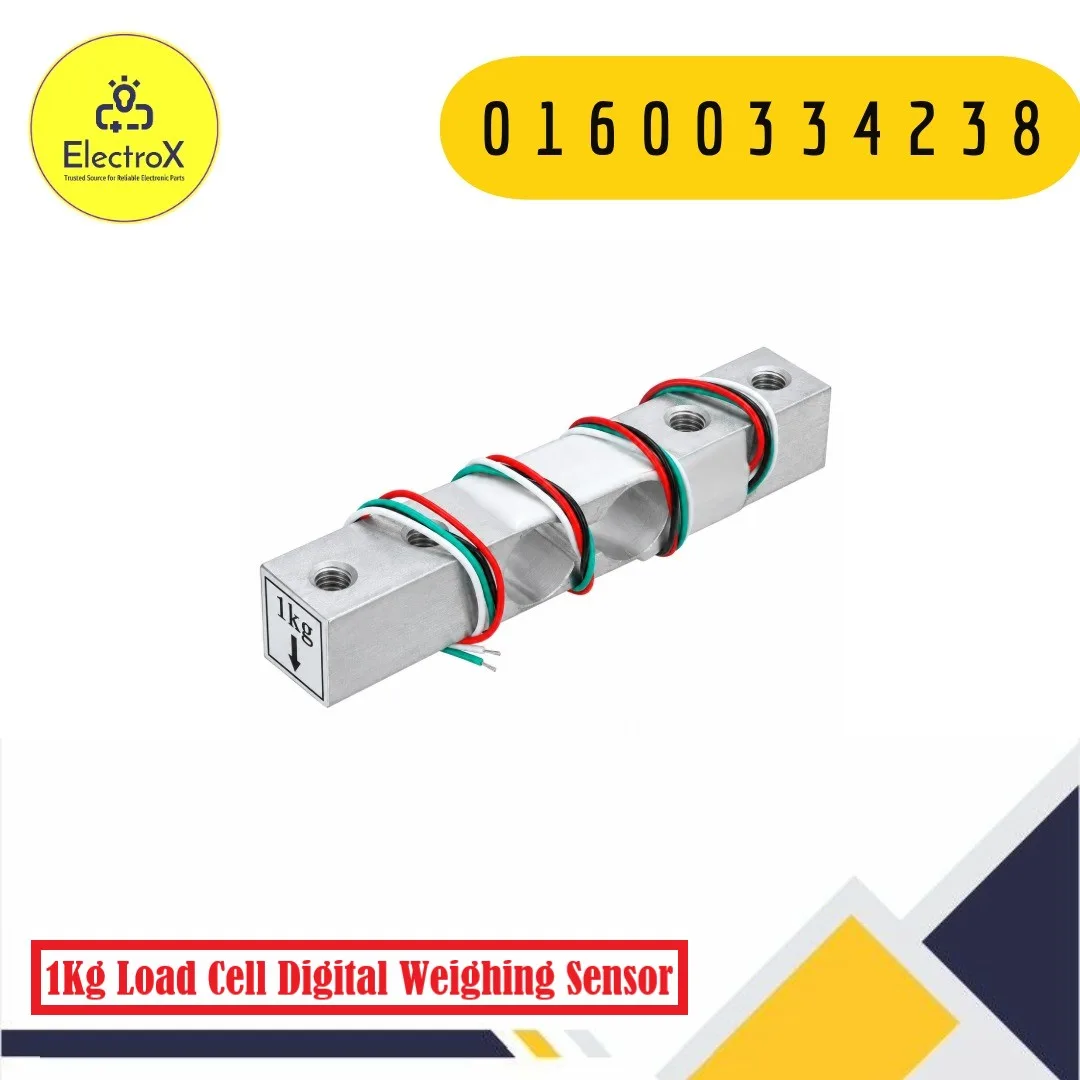
1Kg Load Cell Digital Weighing Sensor Module
৳ 250
- Capacity: 1 kg
- Sensor Type: Strain-gauge load cell
- Measurement: Force/weight detection
- Output: Small analog electrical signal requiring suitable signal conditioning
- Application: Digital weighing scales, Arduino, IoT and measurement projects
3 in stock
1Kg Load Cell Sensor Module Price in Bangladesh
The 1Kg Load Cell Digital Weighing Sensor Module is a compact weight-sensing component designed for electronic weighing and force-measurement applications. With a rated capacity of 1 kg, it is suitable for projects where relatively small changes in applied weight need to be detected electronically.
Load cells are widely used in digital weighing scales, laboratory instruments, industrial measurement systems, robotics, automation equipment, and educational electronics projects. The sensing element inside a load cell responds to mechanical deformation caused by an applied force. This produces a small change in electrical resistance that can be measured by an appropriate signal-conditioning circuit.
For microcontroller projects, the load cell is commonly paired with a dedicated amplifier and analog-to-digital converter such as an HX711-based interface. This allows the very small sensor signal to be converted into digital data that can be processed by an Arduino, ESP32, Raspberry Pi, or another compatible controller.
The 1 kg capacity makes this sensor particularly useful for compact weighing projects, component measurement, small containers, educational experiments, and prototype electronic scales.
What is a Load Cell?
A load cell is an electronic force sensor that converts mechanical force into an electrical signal. Most conventional load cells use strain gauges attached to a specially designed mechanical structure.
When weight is placed on the sensing element, the structure deforms by a very small amount. The strain gauges respond to this deformation by changing their electrical resistance. A bridge circuit can detect this change and produce a corresponding electrical signal.
Because the output signal from a load cell is very small, it normally requires amplification and analog-to-digital conversion before it can be conveniently read by a microcontroller.
Key Features
- 1 kg rated weighing capacity
- Strain-gauge based sensing technology
- Suitable for electronic weighing projects
- Compact sensor construction
- Useful for DIY digital scales
- Compatible with suitable load-cell amplifier modules
- Suitable for Arduino and other microcontroller projects
- Useful for robotics and automation experiments
- Supports force and weight measurement applications
- Ideal for educational electronics projects
Technical Specifications
| Specification | Details |
|---|---|
| Product Type | Load Cell / Weighing Sensor |
| Rated Capacity | 1 kg |
| Sensing Technology | Strain Gauge |
| Measurement Type | Weight / Force |
| Output | Low-level analog differential signal |
| Interface | Requires suitable load-cell amplifier/ADC |
| Typical Interface | Suitable with HX711-type modules |
| Application | Electronic weighing and force measurement |
| Construction | Mechanical load-sensing element |
Note: Exact dimensions, excitation voltage, sensitivity, bridge resistance, accuracy, and wire color/pin configuration can vary between load-cell versions and manufacturers. Verify the specifications of the supplied sensor before final installation.
Working Principle
The 1 kg load cell works through the principle of strain measurement. Inside the sensor, strain gauges are arranged so that their electrical resistance changes when mechanical force is applied to the sensing structure.
When an object is placed on the load cell, its weight produces a mechanical force. The sensing structure undergoes a very small deformation, causing corresponding changes in the strain-gauge resistances.
These resistance changes create a small differential voltage from the bridge circuit. Since this signal is extremely small, a dedicated amplifier and ADC are normally required to convert it into a usable digital measurement.
An HX711-type load-cell interface is commonly used for this purpose. The resulting digital data can then be processed by a microcontroller to display or record the measured weight.
Applications
The 1Kg Load Cell Digital Weighing Sensor can be used for:
- DIY digital weighing scales
- Arduino weighing projects
- ESP32 weight measurement systems
- Small electronic scales
- Kitchen-scale prototypes
- Laboratory educational projects
- Robotics force measurement
- Material and object weight experiments
- IoT weighing systems
- Smart container projects
- Inventory and quantity monitoring
- Automated measurement equipment
Advantages
The 1 kg capacity makes this load cell suitable for small-scale measurement applications where a higher-capacity industrial sensor would not be necessary.
Its strain-gauge sensing technology provides a practical method of converting mechanical force into an electrical signal. When combined with an appropriate amplifier and microcontroller, it can form the basis of a complete digital weighing system.
The sensor is also useful for learning about Wheatstone bridges, strain gauges, analog signal amplification, ADCs, calibration, and digital measurement.
Limitations
A load cell does not directly provide a convenient digital weight reading by itself. It normally requires an appropriate amplifier/ADC and a controller or display system.
Measurement accuracy depends on mechanical mounting, calibration, excitation, electrical noise, temperature, applied load, and the quality of the associated electronics.
The 1 kg rating should not be exceeded. Mechanical overload can permanently affect the sensor or damage its sensing structure.
Installation / Usage Tips
Mount the load cell according to its mechanical design and ensure that the applied force is directed through the intended sensing axis. Avoid unnecessary side loads, twisting, impacts, or mechanical stresses.
For digital weighing projects, use a suitable load-cell amplifier such as an HX711-compatible interface. The system should be properly calibrated using known reference weights before relying on its measurements.
Keep the sensor wiring secure and protected from excessive mechanical movement. Because the output signal is very small, good wiring practices can help reduce electrical noise.
Do not exceed the rated 1 kg capacity. For applications requiring higher loads, select a load cell with an appropriate higher capacity rather than overloading this sensor.
Why Choose the 1Kg Load Cell?
The 1Kg Load Cell is a practical sensing component for compact electronic weighing and force-measurement projects. Its relatively low capacity makes it suitable for small objects and educational prototypes, while its strain-gauge construction provides a direct way to explore electronic weight measurement.
It is particularly useful for makers and students building Arduino or ESP32-based weighing systems and other measurement projects.
Why Buy from ElectroXBD?
ElectroXBD supplies electronic components, sensors, modules, development boards, measurement accessories, and DIY electronics parts for students, engineers, makers, laboratories, and electronics enthusiasts throughout Bangladesh.
You can buy the 1Kg Load Cell Digital Weighing Sensor Module from ElectroXBD for digital scale, Arduino, IoT, robotics, and measurement projects.
ElectroXBD
Trusted Source for Reliable Electronic Parts
Address: H#1/1, Opposite of RH Chhatrabash, Vodra-Talaimari Road, Rajshahi
WhatsApp: 01600334238
Website: electroxbd.com
Frequently Asked Questions (FAQ)
1. What is a 1Kg load cell used for?
A 1Kg load cell is used to measure relatively small amounts of weight or force in electronic weighing systems, DIY scales, robotics, and measurement projects.
2. Can I use this load cell with Arduino?
Yes. A suitable load-cell amplifier and ADC, such as an HX711-based module, can be used between the load cell and Arduino to obtain digital measurement data.
3. Does the load cell directly give a digital output?
No. A conventional strain-gauge load cell produces a very small analog electrical signal. A suitable amplifier and ADC are normally required for digital measurement.
4. What is the maximum weight this load cell can measure?
The rated capacity is 1 kg. The sensor should not be intentionally loaded beyond its specified capacity.
5. Can this sensor be used to make a digital weighing scale?
Yes. A load cell, suitable amplifier/ADC, microcontroller, calibration procedure, and display can be combined to build a digital weighing scale.
6. What amplifier is commonly used with a load cell?
An HX711 load-cell amplifier/ADC module is commonly used with strain-gauge load cells in Arduino and other microcontroller projects.
7. Does the load cell need calibration?
Yes. Calibration is normally required to convert the sensor’s electrical output into a meaningful weight value and to compensate for differences in the sensor and mechanical setup.
8. Where can I buy a 1Kg Load Cell in Bangladesh?
You can buy the 1Kg Load Cell Digital Weighing Sensor Module from ElectroXBD, a trusted electronics components supplier in Bangladesh.
Common Questions:
Q: What is the price of 1Kg Load Cell Digital Weighing Sensor Module in Bangladesh?
A: The latest price of 1Kg Load Cell Digital Weighing Sensor Module in Bangladesh is 250 BDT.
Q: Where to buy 1Kg Load Cell Digital Weighing Sensor Module in Bangladesh?
A: You can buy the 1Kg Load Cell Digital Weighing Sensor Module at the best price from ElectroXBD in Bangladesh.
Only logged in customers who have purchased this product may leave a review.
FAQs
Related products
-
MQ2 Gas and Smoke Sensor Module
৳ 150Add to cart- Detection Range: 200 to 10000 ppm (Parts Per Million) for combustible gases and smoke.
- Operating Voltage: 5V DC.
- Preheat Time: 20 seconds for optimal performance.
- Sensitivity: Adjustable via onboard potentiometer for different gas concentrations.
- Output: Analog and digital signals for easy integration with microcontrollers like Arduino.
-
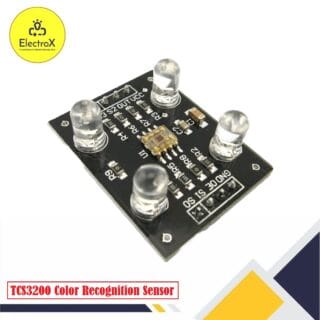
TCS3200 Color Recognition Sensor
Original price was: ৳ 600.৳ 480Current price is: ৳ 480.Add to cart- Sensor Type: TCS3200 RGB color sensor with programmable color filters.
- Operating Voltage: 2.7V to 5.5V DC.
- Output: Square wave with frequency proportional to color intensity.
- Photodiodes: 8 x 8 array with selectable RGB filters.
- Communication Interface: Digital output with adjustable sensitivity.
-
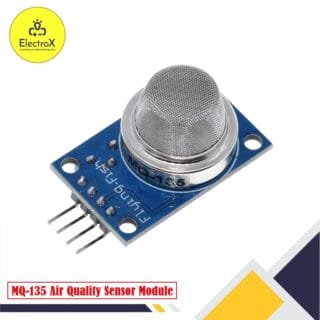
MQ135 Air Quality Detection Sensor
৳ 170Add to cart- Operating Voltage: 5V DC.
- Detection Range: 10 – 1000 ppm (Ammonia, Benzene, Alcohol, Smoke).
- Preheat Time: Over 24 hours for accurate readings.
- Output: Analog output voltage proportional to gas concentration.
- Sensitivity: Adjustable via onboard potentiometer.


Reviews
There are no reviews yet.