
Water Level Sensor Depth Detection For Arduino
৳ 60
-
Operating Voltage: 3.3V–5V DC
-
Output: Analog and digital signals
-
Detection Range: 0–40mm water depth (approx.)
-
Interface: 3-pin (VCC, GND, Signal)
-
Compatibility: Arduino, Raspberry Pi, PIC, AVR, ARM
14 in stock
Water Level Sensor Price in Bangladesh
The Water Level Sensor Depth Detection Module for Arduino is a compact and affordable electronic sensor designed to detect water contact and estimate changes in water level. It is suitable for students, electronics hobbyists, robotics enthusiasts and developers building water monitoring or automation projects.
The module operates from a 3.3V–5V DC supply and provides an analog output that can be read using a compatible microcontroller. As water contacts more of its exposed sensing area, the electrical characteristics of the sensor change, producing readings that can be used to estimate the detected water level.
Its simple three-pin interface makes it easy to integrate into Arduino-based projects without requiring a complicated circuit. The sensor can also be used with compatible ESP32 boards and other microcontrollers, provided their input voltage requirements are respected.
For educational experiments and prototypes, this module offers an accessible way to explore liquid detection, analog-to-digital conversion, sensor calibration and automated control systems.
What Is a Water Level Sensor?
A water level sensor is an electronic component that detects the presence of water or changes in its level. Depending on its design, a sensor may provide a simple wet/dry signal or a variable output that changes with the amount of water contacting its sensing element.
This particular PCB-style sensor uses exposed conductive tracks to detect water contact. It is best suited to short-range detection along its sensing surface rather than measuring the depth of a deep tank. For deep tanks, a waterproof ultrasonic sensor or another appropriately designed level sensor may be more suitable.
Key Features
- Low-voltage operation: Works with a compatible 3.3V or 5V DC supply.
- Analog output: Provides readings that change according to water contact.
- Simple three-pin interface: Uses VCC, GND and signal connections.
- Arduino compatibility: Suitable for many Arduino development boards.
- Microcontroller integration: Can be used with compatible ESP32, AVR, PIC and other systems.
- Compact PCB design: Easy to incorporate into small prototypes.
- Low-cost solution: Suitable for student projects and basic experiments.
- Flexible applications: Useful for water detection, rain sensing and simple level-monitoring demonstrations.
- Easy data collection: Analog readings can be monitored through a microcontroller.
- Automation potential: Readings can be used to trigger an alarm or control system through suitable external circuitry.
Technical Specifications
| Parameter | Specification |
|---|---|
| Product Name | Water Level Sensor Depth Detection Module |
| Sensor Type | Resistive, contact-based water sensor |
| Operating Voltage | 3.3V–5V DC |
| Output Type | Analog signal |
| Detection Range | Approximately 0–40mm |
| Interface | 3-pin |
| Pin Connections | VCC, GND, Signal |
| Sensing Element | Exposed conductive PCB tracks |
| Main Controller Compatibility | Arduino and compatible microcontrollers |
| Typical Applications | Water detection, rain sensing and level experiments |
| Construction | Compact PCB |
| Measurement Accuracy | Depends on calibration, liquid conductivity and installation |
Specifications are approximate and may vary by module version. The output is not a calibrated measurement of absolute liquid depth.
Working Principle
The sensor works by detecting changes in electrical conduction between its exposed sensing tracks when water contacts the PCB.
When the sensing area is dry, the electrical resistance between the tracks is relatively high. When water reaches the tracks, it creates conductive paths between them. The resulting change in electrical characteristics affects the sensor’s analog output.
A microcontroller reads this signal using an analog input and converts it into a numerical value. By testing the sensor at different water levels, users can establish approximate thresholds for low, medium and high water detection.
Because water conductivity varies, readings can differ between distilled water, tap water and other liquids. Calibration is therefore important when using the sensor for practical monitoring.
Applications
1. Arduino Water Level Projects
Use the sensor to demonstrate basic water detection and analog sensor readings with an Arduino UNO or Nano.
2. Water Level Alarm
Combine the sensor with a compatible controller, buzzer and indicator LED to create a basic water detection alarm.
3. Rain Detection
Use it in an educational rain-sensing prototype to detect water droplets or surface wetness.
4. Water Leakage Detection
Place the sensing area near a potential leak location to detect water accumulation.
5. Smart Irrigation Experiments
In an educational setup, use its readings to demonstrate water detection and simple irrigation-control logic.
6. Flood Detection Demonstrations
Use the module to demonstrate how rising water at a monitored location can trigger an alert.
7. IoT Monitoring
Connect it to a compatible ESP32 project to explore sensor data collection and remote monitoring.
8. Electronics Education
Use it to teach analog inputs, sensor calibration, signal thresholds and microcontroller programming.
Advantages
Easy integration: The three-pin interface simplifies connection to a compatible development board.
Affordable experimentation: Its simple design makes it appropriate for beginners learning electronics and sensor systems.
Variable output: Analog readings provide more information than a basic on/off switch, although calibration is required.
Compact construction: The narrow PCB form factor is useful for small experimental setups.
Flexible programming: Users can process the readings to display values, trigger alerts or control compatible external devices.
Limitations
- The sensing area is short, with an approximate detection range of 0–40mm.
- It is not a substitute for a deep-tank level sensor.
- Readings depend on water conductivity, temperature, contamination and sensor condition.
- Exposed conductive tracks can corrode during prolonged exposure, especially when continuously powered.
- The electronic connector and upper circuitry must be kept dry.
- It is not intended for corrosive liquids or applications requiring certified industrial accuracy.
- Long-term outdoor or permanent immersion applications may require a more suitable sensor design.
Installation and Usage Tips
- Connect VCC to a compatible 3.3V–5V DC supply.
- Connect GND to the controller’s ground.
- Connect the signal pin to a suitable analog input.
- Keep the connector and electronic components away from water.
- Test the sensor at several known water-contact levels and record the readings.
- Set thresholds based on the actual readings rather than assuming a universal value.
- Avoid leaving the exposed sensing tracks powered continuously; energize the sensor only when measurements are needed where practical.
- Clean and dry the sensing surface after use.
- For ESP32 boards, ensure the analog input is not exposed to a voltage above its permitted limit.
- For permanent tank monitoring, consider a sensor designed for continuous operation and the required measurement depth.
Why Choose This Water Level Sensor?
The Water Level Sensor Depth Detection Module is a practical choice for basic water-detection experiments and microcontroller projects. Its low-voltage operation, compact size and analog output help users learn how sensors interact with water and how electronic systems can respond to changing conditions.
It is particularly useful for Arduino beginners, robotics enthusiasts and students developing prototypes involving alarms, rain detection, water contact or simple liquid monitoring.
For applications involving deep tanks, continuous immersion or precise liquid-depth measurement, choose a sensor specifically designed for those requirements.
Why Buy from ElectroXBD?
ElectroXBD — Trusted Source for Reliable Electronic Parts supplies electronic components, sensors, development boards and robotics accessories for students, engineers, makers and electronics enthusiasts in Bangladesh.
Whether you are building an Arduino experiment, a water detection alarm or a prototype automation system, ElectroXBD can help you source useful electronic components for your project.
Website: electroxbd.com
Mobile/WhatsApp: 01600334238
Email: electroxbd@gmail.com
Shop Address: H#1/1, Opposite of RH Chhatrabash, Vodra-Talaimari Road, Rajshahi
Frequently Asked Questions (FAQ)
1. What is the Water Level Sensor for Arduino used for?
It detects water contact and provides analog readings that can be used in water detection, rain sensing, leakage alarms and basic level-monitoring projects.
2. What is the operating voltage of this sensor?
The module is specified for operation from 3.3V to 5V DC. Always verify the requirements of the specific module version.
3. Can I use this sensor with Arduino UNO?
Yes. It can be connected to a compatible Arduino UNO analog input using its VCC, GND and signal pins.
4. Can this sensor measure water in a deep tank?
No. Its approximate 0–40mm sensing range makes it more suitable for short-range water contact and shallow-level detection. A waterproof ultrasonic or other suitable level sensor is preferable for deeper tanks.
5. Does the sensor provide analog output?
Yes. Its analog output changes with water contact. You can use software thresholds to classify readings as low, medium or high.
6. Can I use this sensor with ESP32?
Yes, provided you power it appropriately and connect its output to an ESP32-compatible analog input without exceeding the input’s voltage limit.
7. Can the sensor remain in water permanently?
Continuous exposure is not recommended for this exposed-track sensor because corrosion can reduce its service life. Consider a sensor designed for permanent immersion if continuous monitoring is required.
8. Can it detect rainwater?
Yes. It can detect rainwater contacting the sensing tracks, making it useful for basic rain-detection demonstrations. Environmental protection is needed for outdoor installations.
9. Does this module require a separate amplifier?
For basic analog reading, an additional amplifier is generally unnecessary when using a compatible microcontroller analog input. The exact interface depends on the module version and application.
10. Where can I buy a Water Level Sensor for Arduino in Bangladesh?
You can buy the Water Level Sensor Depth Detection Module from ElectroXBD, a trusted electronics components supplier in Bangladesh.
Common Questions:
Q: What is the price of Water Level Sensor Depth Detection For Arduino in Bangladesh?
A: The latest price of Water Level Sensor Depth Detection For Arduino in Bangladesh is 60BDT.
Q: Where to buy Water Level Sensor Depth Detection For Arduino in Bangladesh?
A: You can buy the Water Level Sensor Depth Detection For Arduino at the best price from ElectroXBD in Bangladesh.
Only logged in customers who have purchased this product may leave a review.
FAQs
Related products
-
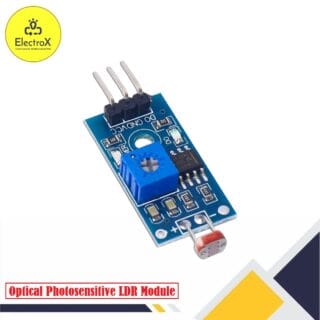
Optical Photosensitive LDR Module for Arduino
৳ 99Add to cart- Operating Voltage: 3.3V to 5V.
- Sensitivity: Resistance decreases from hundreds of kΩ in darkness to a few hundred Ω in bright light.
- Response Time: Milliseconds.
- Output Type: Typically provides analog output; some may offer digital output.
- Detection Range: 380 nm (UV) to 750 nm (visible light).
-
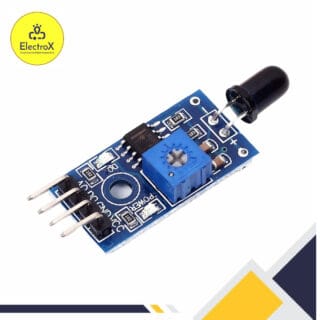
Flame Sensor Fire Detection Module for Arduino
Original price was: ৳ 80.৳ 50Current price is: ৳ 50.Add to cart- Operating Voltage: 3.3V to 5V DC.
- Detection Angle: Approximately 60 degrees.
- Spectral Range: Detects flame wavelengths between 760 nm to 1100 nm.
- Digital and Analog Output: Provides both types of outputs for flexible interfacing.
- Detection Distance: Capable of detecting flames up to 100 cm away.
-
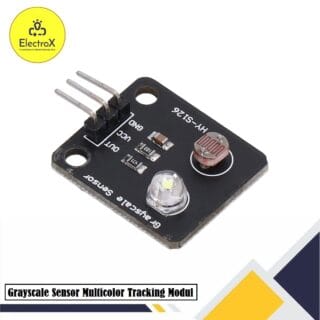
Grayscale Sensor Color Tracking Sensor
Original price was: ৳ 300.৳ 250Current price is: ৳ 250.Add to cart- Input Voltage: 3.3V to 5V DC, compatible with most microcontrollers.
- Detection Range: 0 to 5 cm, ideal for close-range tracking.
- Output Type: Digital output signal for easy interfacing with microcontrollers.
- Response Time: Less than 10ms, ensuring fast and accurate color detection.

Reviews
There are no reviews yet.